Full occupancy starts when a hotel can serve demand without losing control of guest communication, reception work, data, and decisions. For small hotels, villas, and apartments, this means building one connected system before scaling campaigns, so more visibility turns into smoother stays and stronger bookings.
Many accommodation businesses treat occupancy as a marketing problem first.
That creates risk.
A better campaign can bring more visitors to the website. It can also bring more questions, more arrivals, more room changes, more service requests, and more pressure on reception. If the hotel has weak systems, growth exposes the cracks faster.
That is why Temelj starts with the foundation. The goal is not only more attention. The goal is a hospitality business that can attract, answer, serve, measure, and improve with less friction.
Hotel growth needs more than stronger promotion
Marketing does not fix an unclear offer. It only makes the confusion visible to more people.
A hotel may have a good location, clean rooms, and a hard-working team, but still lose demand through weak positioning, slow replies, poor website structure, scattered guest messages, and unclear reception ownership. These problems do not always look dramatic. They quietly reduce trust.
Guests notice small signals.
Slow answers matter.
Unclear instructions matter.
When these signals stack up, the guest hesitates, books somewhere else, asks the same question twice, or arrives with low confidence. Strong occupancy starts before the booking. It starts with a business that feels clear.
The first foundation is offer clarity
A hotel needs a clear offer before it spends more on traffic. Guests should understand who the property serves, why it fits their trip, what experience they can expect, and what makes it different from similar options.
This does not mean loud branding. It means useful precision.
A family hotel, boutique stay, villa, apartment group, or seasonal coastal property should not speak in the same generic way. Each one has a different buyer, rhythm, pain point, and reason to choose.
Offer clarity helps every next layer. It shapes the website, content, guest messages, ads, PR, local recommendations, upsells, and direct booking strategy.
The second foundation is a website that can convert
A hospitality CMS and direct booking system should do more than look clean. It should help the guest decide and move from useful destination content to a direct reservation.
The best hotel websites answer practical doubts quickly: location, rooms, amenities, parking, breakfast, check-in, cancellation, direct booking benefits, and nearby experiences. They also guide the guest toward one clear next step.
A weak website creates extra work for reception.
Guests ask what the website failed to explain.
This is where content, design, and operations meet. The website should reduce uncertainty before the guest contacts the property. It should also support the team by making basic information easy to find.
Qualified demand beats random traffic
More visitors do not always mean better bookings. A hotel needs qualified demand from guests who fit the property, the season, the price level, and the service model.
A connected hotel growth system combines SEO, content, Digital PR, paid media, email, video and market timing around the same business goal instead of treating every channel as a separate activity.
This matters for small teams.
Scattered marketing drains focus.
When demand generation connects with operations, the hotel can see which markets, pages, campaigns, and offers produce useful bookings. That gives owners and managers a better basis for decisions.
Guest communication turns interest into trust
Guest communication software can turn interest into trust before price becomes the only deciding factor. Fast, accurate answers reduce doubt and make the stay feel organized before arrival.
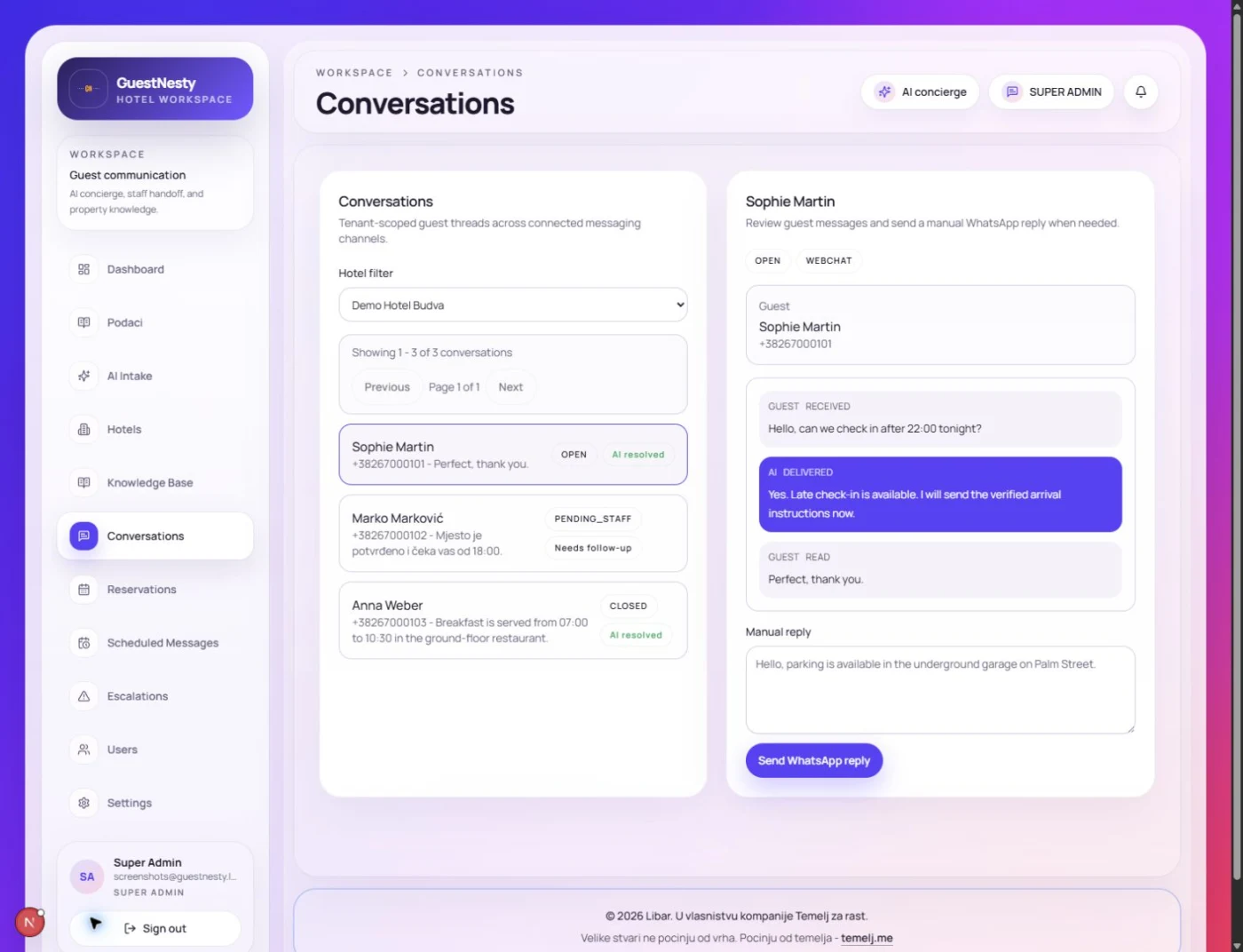
The repeated questions are familiar: check-in time, Wi-Fi, parking, directions, breakfast, late checkout, house rules, transport, local restaurants, and things to do nearby. These questions are simple, but they take time when the team answers them manually all day.
Automation can help here.
But it must stay controlled.
Guest communication should use approved property knowledge, clear escalation, and human handoff when the request needs judgment. The goal is not to replace hospitality. The goal is to protect staff time and give guests reliable answers faster.
Reception work decides whether growth feels controlled
A hotel can win more bookings and still feel unstable if reception work stays scattered. A hotel operations system gives arrivals, departures, room status, housekeeping, payments, guest notes, invoices and maintenance shared visibility.
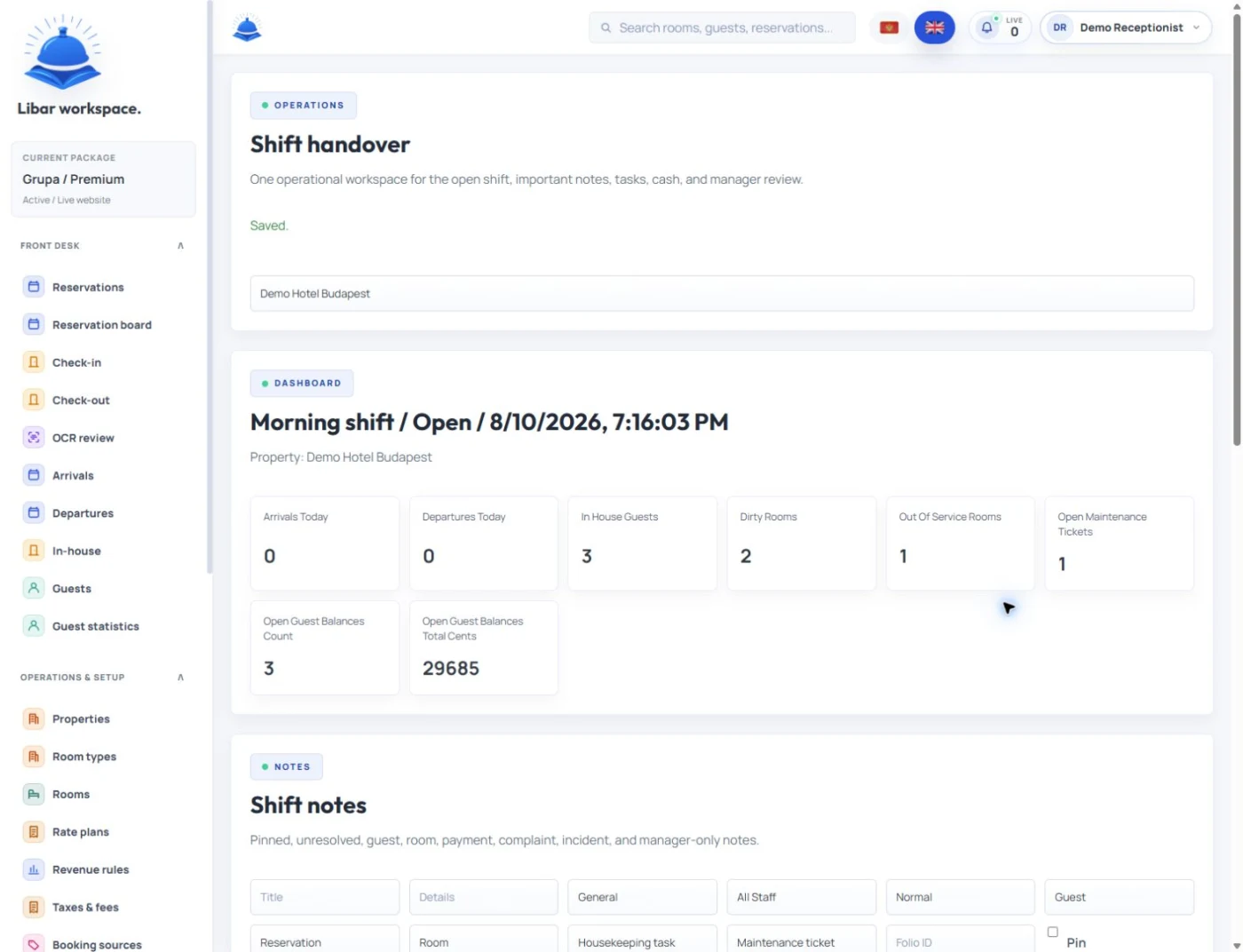
This is where many small hotels lose control during busy periods. A request stays in a WhatsApp chat. A room status changes but reception does not see it. A payment note sits in someone’s memory. A manager only hears about the problem after checkout.
Good reception systems reduce this risk.
They make the day visible.
When reception has one place for guest flows, tasks, handovers, room readiness, folios, invoices, and reports, the team can work with more confidence. The guest feels that confidence through smoother service.
Hotel software should connect the guest journey and daily work
Hotel software works best when it supports the full guest journey. That journey starts with discovery, continues through booking and pre-arrival, and then moves into reception, stay support, checkout, reviews, and repeat demand.
A small hotel does not need a complicated enterprise stack. It needs the right layers.
| Layer | Main job | What it should improve |
|---|---|---|
| Website and content | Explain the offer and attract qualified guests | Trust, visibility, direct demand |
| Guest communication | Answer questions and guide the guest | Speed, consistency, service confidence |
| Reception workflow | Manage daily hotel work | Handover, room status, tasks, billing |
| Reporting | Show what works and what breaks | Better decisions and less guessing |
| Growth support | Connect channels and operations | More controlled scaling |
This is the logic behind the Temelj ecosystem. Growth should not sit outside operations. Software should not sit outside the guest experience.
GuestNesty, Libar, and Growth Package each solve a different part
GuestNesty supports the communication layer. It helps hotels, villas, and apartments answer common guest questions through WhatsApp, using property knowledge and human handoff when needed.
Libar supports the operational layer. It helps reception and property teams manage reservations, arrivals, departures, guest records, room readiness, tasks, handovers, folios, invoices, and daily visibility.
Growth Services supports the demand layer. It connects website, SEO, content, PR, campaigns, email, analytics, guest communication, and operational readiness into one growth path.
Together, these layers help answer one larger question: can the business handle more demand without creating more chaos?
Montenegro and the Adriatic season make structure more important
Hospitality on the Adriatic coast often runs under seasonal pressure. Demand rises quickly, guest expectations increase, and small teams carry more work in fewer months.
This creates a specific type of operational stress. A hotel may need to handle multilingual guests, late arrivals, airport transfers, local recommendations, room changes, owner updates, and fast housekeeping coordination in the same day.
Budva, Montenegro, and the wider coastal region reward properties that move with discipline. The guest may come for the sea, weather, food, and local experience, but the business still depends on clear systems behind the stay.
Strong foundations make the peak season easier to manage. They also help the hotel prepare for the next one with better data.
The real downside is that structure takes work before it pays back
A connected growth system does not appear from one meeting. The hotel must clarify the offer, organize information, clean up website structure, define workflows, prepare guest knowledge, set reporting rules, and train the team.
This takes effort.
It can feel slower than launching another campaign.
But the value compounds. Once the foundation exists, every channel works with better material. Every guest message uses clearer information. Every handover has more context. Every report gives stronger signals for the next decision.
The trade-off is simple: move slower at the start, then grow with less waste.
A practical foundation checklist for accommodation businesses
Use this checklist before scaling spend, adding new tools, or launching a stronger content plan.
| Area | Check before growth |
|---|---|
| Offer | Clear guest type, property promise, direct booking reason |
| Website | Clear structure, useful room pages, visible contact path, fast answers |
| SEO and content | Topics connected to buyer doubts, not random blog posts |
| Guest communication | Approved answers, message templates, escalation rules |
| Reception | Arrivals, departures, room status, tasks, notes, billing |
| Data | Source tracking, conversion events, booking signals, monthly review |
| Team ownership | Named owners for guest replies, content, operations, and reporting |
| Software | Tools that support the workflow instead of adding confusion |
This checklist should guide the first diagnosis. It shows where the hotel is ready and where growth may break under pressure.
Where to go deeper in the hotel growth system
This article is the starting point for the Hotel Growth cluster. Before changing channels or tools, use a hotel technology audit checklist to find the gaps that could weaken growth.
For daily operations, use the hotel front desk handover checklist to review room status, open tasks, payments and ownership between shifts.
For communication, start with how to reduce repeated guest questions before check-in without losing the human handoff.
The system works when offer, demand, communication and operations share one direction. Each deeper guide should solve one specific problem without reducing hotel growth to a campaign or a software purchase.
This structure keeps the Hotel Growth cluster informational: each article explains one decision, shows how it affects the wider system and leads to a useful next step.